
How Much Do Braces Cost? A Breakdown by Type (Metal, Ceramic, Lingual)
Start Here: The Complete Guide
Looking for a general overview of 2026 pricing and insurance?
Read our Ultimate Guide to Braces Cost & Insurance →The “Sticker Shock” Moment
In my fifteen years sitting knee-to-knee with parents and adult patients, I recognize the moment “sticker shock” sets in. The treatment coordinator slides the financial sheet across the desk, and I see the eyes widen. I hear the inevitable question: “Doctor, why does a handful of metal brackets cost as much as a used sedan?”
It’s a valid question. In 2025, with inflation and rising premiums, a quote for $6,500 or $8,000 feels heavy. But you aren’t paying for the hardware; you are investing in the biological engineering of a human bite.
The Economics: Why Do Braces Cost So Much?
To understand the price tag, we have to look at the operational costs. In 2025, overhead averages 60% of collections.
- 1. The Technology Premium The gooey impression trays are gone, replaced by intraoral scanners (like iTero) that cost upwards of $50,000 plus data fees.
- 2. The Rise of Lab Fees Metal brackets are stocked in-house (low fee). But for Invisalign, the doctor pays a massive fee ($1,000–$1,800) to the manufacturer upfront. For Lingual braces, custom gold casting can triple this cost.
- 3. The 2026 Inflation Factor Industry analysts project a 4-5% fee increase for 2026 due to labor shortages and rising commercial rent.
Detailed Cost Breakdown by Appliance
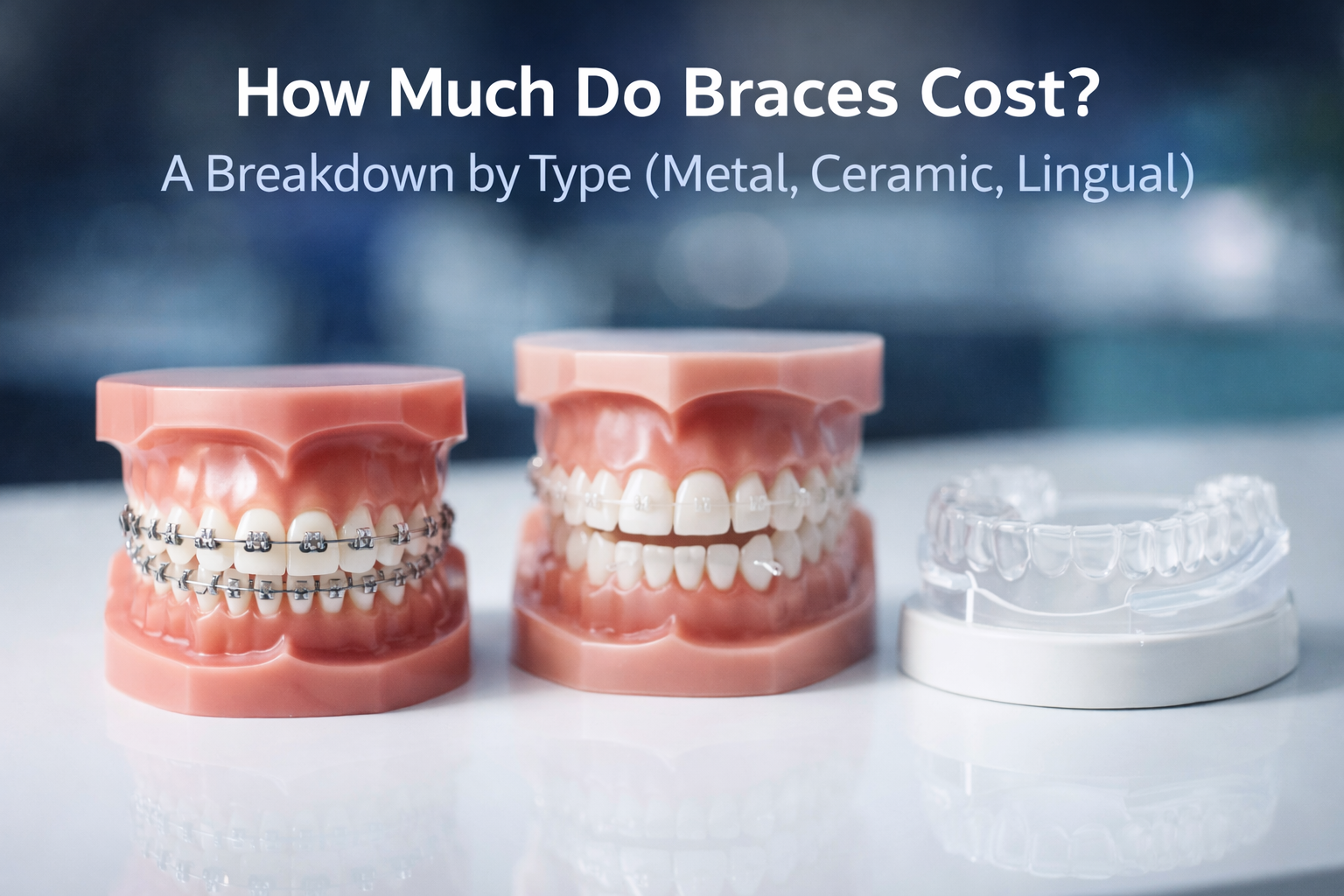
1. Traditional Metal Braces
$3,000 – $7,500The “Reliable Workhorse.” High-grade stainless steel. The most cost-effective option because materials are standardized.
- Best For: Complex surgical cases, kids, budget-priority.
- Why: Complete biomechanical control for severe rotations.
2. Ceramic (Clear) Braces
$4,000 – $8,500The “Aesthetic Compromise.” Polycrystalline alumina brackets that blend with teeth.
⚠️ The “Staining” Myth: The brackets don’t stain, but the elastic ties DO. Coffee and curry will turn them yellow quickly.
3. Lingual Braces
$8,000 – $13,000The “Invisible Luxury.” Mounted behind the teeth. Astronomical cost due to custom gold casting and difficult working conditions for the doctor.
Note: Expect speech impediments (lisps) for the first 2-4 weeks.
4. Clear Aligners (Invisalign)
$3,000 – $9,000The “Modern Standard.” Pricing varies by package:
- Express/Lite: $2,500 – $4,500 (Minor relapse).
- Comprehensive: $5,000 – $8,500+ (Includes refinements).
Quick Comparison
| Feature | Metal | Ceramic | Lingual | Invisalign |
|---|---|---|---|---|
| Visibility | High | Low | Invisible | Very Low |
| Comfort | Low | Moderate | Low (Tongue) | High |
| Lab Fees | Low | Moderate | Very High | High |
The Medicaid Maze & HLD Index
Medicaid is designed for “handicapping malocclusions,” not cosmetic fixes. Most states use the HLD Index score to decide.
Automatic Qualifiers (No Points Needed):
- Cleft Palate/Lip.
- Deep Impinging Overbite (Tissue destruction required).
- Severe Traumatic Deviations.
- Anterior Crossbite with gum recession.
| State | Passing Score | Notes |
|---|---|---|
| California / NY | 26 Points | Very strict on “Deep Impinging Overbite”. |
| Missouri | 28 Points | Higher threshold than most. |
| Indiana | List-based | Uses Category II/III list. |
Financing & Hidden Costs
Financing Options
- In-House Plans: 0% APR. The smartest choice. Requires down payment.
- CareCredit: 0% Promo or 26.99%. Good for $0 down but risky if you miss payments.
Hidden Costs
- Retainers ($100-$500): They are forever. Expect to replace them every few years.
- Lost Aligners ($50-$150): Replacement trays cost money.
- Extractions: Billed separately by oral surgeons.
Clinical Insights: Pain & Diet
Day 1: No Pain
Just pressure and “fullness”.
Days 2-3: The Peak
Teeth feel sore and loose. Inflamed ligaments.
Days 5-7: Relief
Soreness fades. Back to normal diet.
The “Do Not Eat” List
People Also Ask
Can I get braces on just top teeth to save money?
Rarely. Straightening only the top often creates bite issues. Reserved for minor cosmetic touch-ups.
Is it cheaper to go to a dental school?
Yes, 30-50% less. The trade-off is longer appointment times and restrictive hours.
Conclusion: Your Next Steps
- Get Three Opinions: Consultations are usually free.
- Verify Insurance: Look for “Lifetime Maximum” and Age Limits.
- Timing: Use FSA funds during open enrollment.
Disclaimer: This article is for informational purposes only and does not constitute medical advice.