
How Much Do Braces Cost in Texas? 2026 Local Pricing Guide
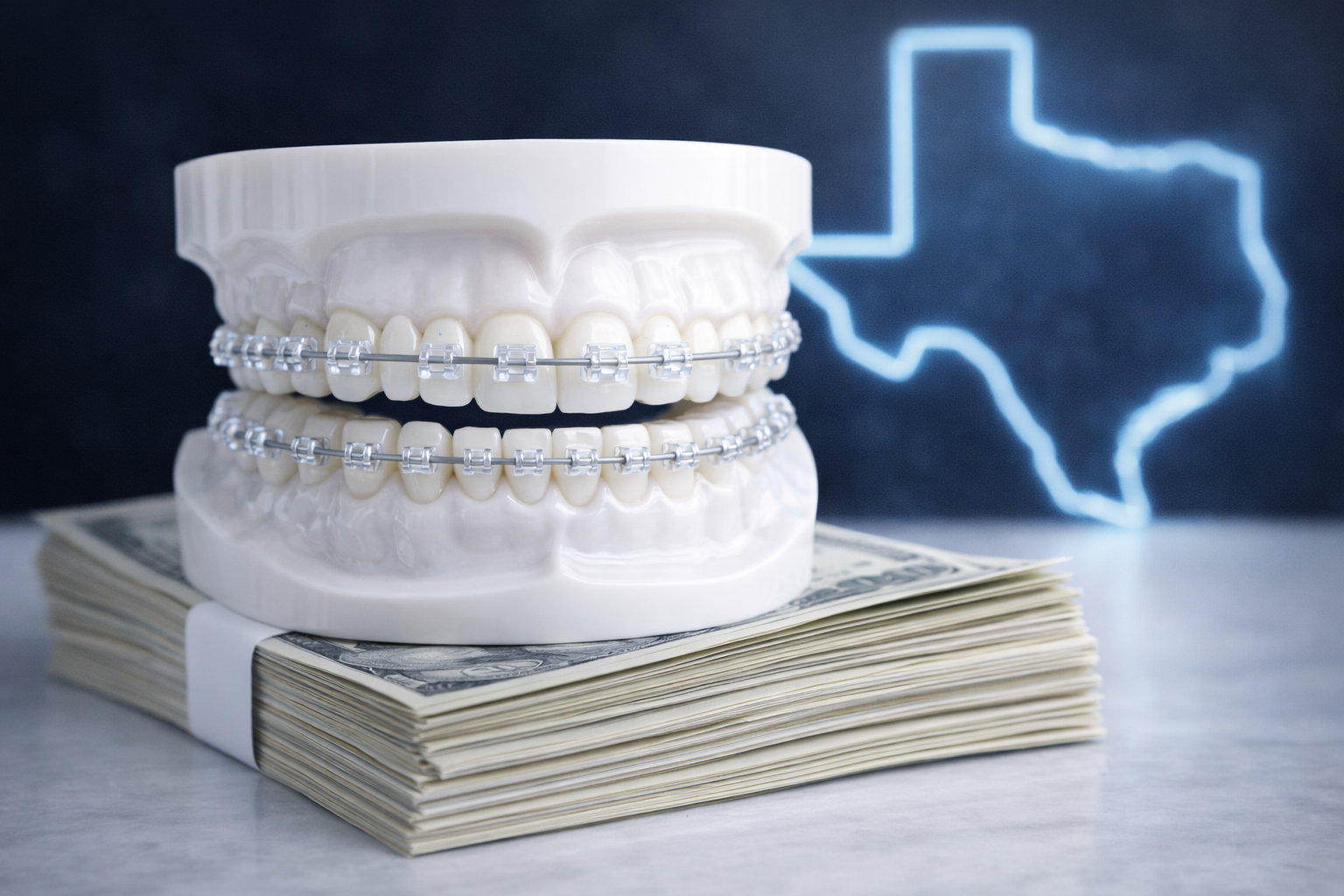
If you live in the Lone Star State and are considering orthodontic treatment, the first question on your mind is the price tag. The average cost of braces in Texas ranges between $3,000 and $7,500.
However, this is just a statewide average.
The final quote you receive will vary dramatically depending on whether you live in downtown Austin, suburban Houston, Dallas, or San Antonio, the specific type of braces you choose, and your insurance coverage.
In this comprehensive 2026 local pricing guide, we break down the exact costs by treatment type and city, how to navigate Texas Medicaid, and the insider secrets to finding cheap braces in Texas without sacrificing quality.
Average Braces Cost in Texas (By Type)
The primary factor dictating your bill is the material and technology used for your appliances. For a deeper dive into these options, see our Ultimate Braces Comparison Guide.
| Type of Braces | Texas Average Cost (2026) | Best For |
|---|---|---|
| Traditional Metal Braces | $3,000 – $6,000 | Most affordable, highly durable, fastest for complex cases. |
| Ceramic (Clear) Braces | $4,000 – $7,000 | Aesthetics on a budget. |
| Clear Aligners (Invisalign) | $3,500 – $8,000 | Adults and highly compliant teens with mild/moderate crowding. |
| Lingual Braces (Behind teeth) | $8,000 – $10,000+ | 100% invisible treatment; highest lab fees. |
Cost Differences by Texas City
Orthodontic pricing is heavily influenced by commercial real estate costs and local market demand. Here is how the major metro areas stack up:
- Austin: Typically the most expensive market. High overhead costs for clinics in areas like the Domain or Westlake often push average metal braces closer to $5,500 – $6,500.
- Dallas/Fort Worth (DFW): Highly competitive. Prices in downtown Dallas may be premium, but traveling 20 minutes to suburban clinics in Arlington or Plano can drop your quote by $500 to $1,000.
- Houston: A massive, sprawling market offering a wide range of prices. You can find highly competitive rates ($3,500 – $5,000) in areas like Katy or Sugar Land due to the high density of orthodontic practices.
- San Antonio: Generally offers the most affordable private practice rates among the “Big Four” Texas cities, with averages often sitting comfortably around $4,000 – $5,000.
Does Insurance Cover Braces in Texas?
Yes, if you have a private dental PPO plan (like Delta Dental, Cigna, or BlueCross BlueShield of Texas), you likely have an orthodontic benefit.
However, as detailed in our Private Insurance Guide, dental insurance does not pay the full bill. Most plans have a Lifetime Orthodontic Maximum (usually between $1,000 and $2,000). If your braces cost $5,000 and your lifetime maximum is $1,500, your out-of-pocket cost will be $3,500. Additionally, many Texas employer plans have age restrictions, covering braces only for dependents under age 19.
Does Texas Medicaid Cover Braces?
Yes, but with strict limitations. Texas Medicaid (administered through the Texas Medicaid & Healthcare Partnership – TMHP) and CHIP will cover the full cost of braces for children under the age of 21, but only if the treatment is deemed strictly medically necessary.
Cosmetic issues (like a gap between the front teeth) will be denied. To get approved in Texas, the child must score high enough on the Handicapping Labio-Lingual Deviation (HLD) index. Qualifying conditions include severe cleft palate, severe crossbites causing facial asymmetry, or extreme overjets (buck teeth) that impair eating or speaking. Adult Medicaid in Texas does not cover orthodontic treatment.
Monthly Payment Plans in Texas
Very few Texans pay for braces in a single lump sum. Almost every orthodontic office in Texas offers internal financing. A typical payment structure looks like this:
- Down Payment: Usually $250 to $1,000.
- Monthly Installments: $150 to $250 a month spread over 18 to 24 months.
- Interest: Most in-house clinic plans are true 0% interest.
Financial Pro Tip: If you have an employer-sponsored HSA or FSA account, you can use those pre-tax dollars to pay your monthly installments. Read our HSA/FSA Negotiation Guide to learn how to legally stretch your tax-free dollars across multi-year treatment plans.
How to Find Cheap Braces in Texas (Without Sacrificing Quality)
If you do not have insurance and cannot afford private practice fees, Texas has incredible resources for affordable, high-quality care:
1. Texas Dental Schools (The Best Kept Secret)
You can get premium braces applied by orthodontic residents (who are already licensed dentists training to become specialists) under the strict supervision of master orthodontists. Prices here are often 30% to 50% cheaper than private clinics. Top programs include:
- UTHealth School of Dentistry (Houston)
- Texas A&M College of Dentistry (Dallas)
- UT Health San Antonio School of Dentistry
2. The Paid-In-Full (PIF) Discount
If you have the cash available, almost every Texas clinic will offer a 3% to 8% discount if you pay the entire balance upfront, saving them administrative and credit card processing fees.
3. Get Multiple Free Consultations
Initial consultations (including X-rays) are usually 100% free in Texas. Visit 3 different orthodontists in your city. You will be shocked to see quotes vary by up to $1,500 for the exact same treatment plan.
Texas Cost vs. The National Average
The good news? Compared to the national average (where braces often exceed $6,500 in states like New York or California), Texas remains one of the more affordable states for orthodontic care. The high density of competing clinics, especially in the DFW and Houston metroplexes, keeps prices highly competitive for consumers. For a broader perspective on pricing, visit our National Braces Price Breakdown.
Ready to Start Your Smile Journey?
Looking for a braces consultation near you? Compare orthodontists in Texas carefully, ask for a written cost breakdown, and don’t be afraid to negotiate the payment terms.
Learn How to Negotiate Your QuoteFinancial Disclaimer: The pricing data provided in this guide represents state-wide averages for Texas as of 2026. Actual costs will vary based on individual clinical complexity, specific provider fees, and your insurance plan’s contracted rates. Always obtain a formal, written financial contract before beginning medical treatment.
Financial Deep Dives
Hidden Fees Alert
When getting a quote in Texas, ask if “diagnostic records” (X-rays) and “post-treatment retainers” are included in the total fee, or if they cost extra.