
Ceramic Braces Durability: Why Modern Materials Don’t Stain Anymore
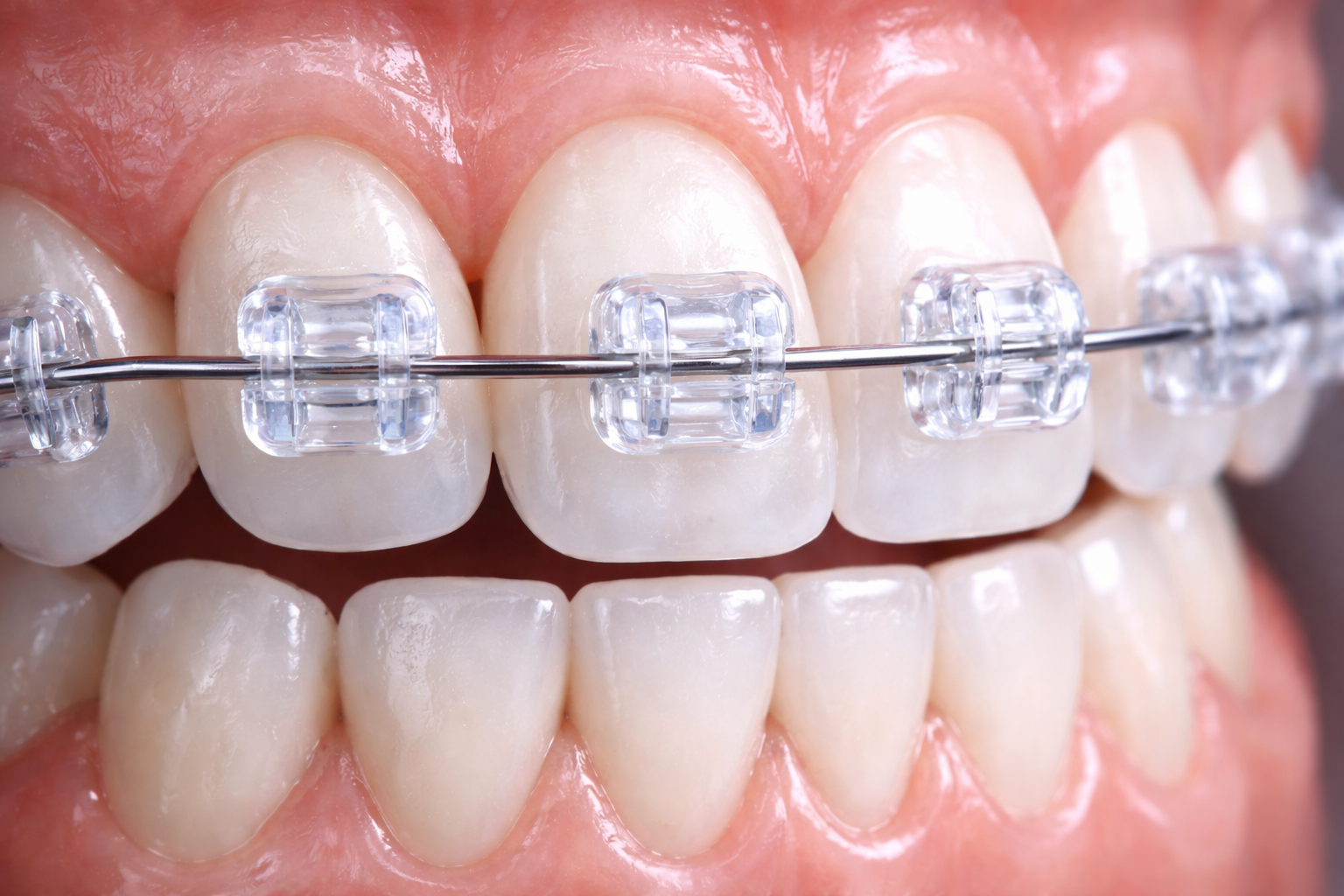
If you are researching aesthetic orthodontic options, you have undoubtedly read the warning: “Don’t get ceramic braces, they turn yellow after a month.”
“Early ceramic braces in the 1990s had severe staining issues. Modern monocrystalline systems utilized in 2026 do not behave the same way.”
The narrative that clear brackets act like sponges for coffee and curry is scientifically outdated. Today, we are breaking down the material science behind modern ceramic braces durability, exposing what actually stains in your mouth, and explaining why engineering—not marketing—has solved this decades-old problem.
What Are Ceramic Braces Made Of?
Not all “clear braces” are created equal. The industry has seen a massive shift in crystalline structure over the past two decades.
The Old Generation:
Polycrystalline Ceramic
Made by fusing multiple crystal grains together. The boundaries between these grains created a rougher surface at a microscopic level, causing high light scattering (making them look cloudy or opaque) and creating surface micro-porosities.
The Modern Standard:
Monocrystalline Ceramic
Engineered from a single, solid crystal structure (often synthetic sapphire). They feature extremely high translucency, a glass-like smooth surface finish, and significantly lower biofilm (plaque) adherence.
Why Old Ceramic Braces Stained
The myths of the 90s were based on real clinical failures. The old polycrystalline brackets stained because of:
- Porous Microstructure: The rough grain boundaries acted like microscopic craters, trapping dark food pigments.
- Poor Glazing Quality: The protective outer layer would wear off quickly during brushing.
- Rough Edges: Increased biofilm (bacterial plaque) retention, which absorbs colors from food.
The Material Science Behind Modern Durability
Today’s premium ceramic brackets (like those from 3M or Ormco) are marvels of biomedical engineering. According to material specifications utilized by the American Association of Orthodontists, modern durability relies on:
- High-Density Alumina Composition: Extremely resistant to chemical degradation from acidic foods.
- Advanced Sintering Processes: Firing the ceramic at hyper-elevated temperatures eliminates microscopic pores.
- Laser-Polished Surfaces: Creates a friction-free surface that makes it physically impossible for coffee or wine pigments to penetrate the bracket itself.
Do Ceramic Braces Break More Easily Than Metal?
We must be scientifically honest. While they do not stain, how do they handle physical stress compared to traditional metal braces?
| Mechanical Factor | Ceramic Braces | Metal Braces |
|---|---|---|
| Hardness & Strength | Extremely High | Very High |
| Ductility (Bending) | Low (Brittle) | High (Flexes) |
| Fracture Risk | Slightly Higher | Very Low |
| Stain Resistance | High (Modern Only) | N/A |
Conclusion: Ceramic is actually harder than metal, but it lacks ductility. If you bite down on ice, metal will bend; ceramic will shatter. This is why strictly following the safe food list is mandatory.
What Actually Stains During Treatment?
If the modern bracket doesn’t stain, why do patients still complain about yellowing? The answer lies in the accessories:
- Elastomeric Ligatures (O-Rings): These are the tiny clear rubber bands used to hold the wire into the bracket. The rubber acts like a sponge. This is what turns yellow when you drink coffee, tea, or eat turmeric—not the ceramic bracket.
- Poor Oral Hygiene: Plaque buildup around the base of the bracket absorbs food coloring. If your teeth look yellow, it’s often the plaque, not the appliance.
Clinical Reality: When Ceramic Is Not Ideal
As discussed in our clinical complexity matrix, material selection depends on the bite. Ceramic is not recommended for:
- Severe Torque Cases: When massive force is needed to drag a root through bone, the brittle nature of ceramic increases the risk of bracket fracture.
- Lower Teeth in Deep Bites: Ceramic is harder than tooth enamel. If your top teeth bite down onto lower ceramic brackets, the bracket will grind away your natural tooth enamel instantly.
- Patients with Severe Bruxism: Nighttime teeth grinding will shatter ceramic brackets.
How to Prevent Staining With Ceramic Braces
-
Upgrade to Self-Ligating Ceramic: Brands like Damon Clear use a built-in sliding door to hold the wire instead of porous rubber O-rings. No rubber bands = zero staining.
-
Request Silver Ligatures: If your doctor uses O-rings, ask for light silver or “smoke” colored ties instead of clear. They blend in beautifully but do not show stains.
-
Strict Hygiene Protocol: Implement our Ultimate Braces Hygiene Routine. Use a water flosser immediately after drinking coffee to flush pigments away before they set into the rubber.
Science Over Assumption
Modern ceramic brackets are engineered biomaterials, not decorative plastics.
Their performance and aesthetic longevity depend far more on your oral habits and ligature choices than on intrinsic material weakness. Don’t let 1990s myths dictate your 2026 treatment choice.
Compare Ceramic vs Invisalign Head-to-HeadEducational Disclaimer: This article provides a material science overview of orthodontic appliances and does not replace a clinical consultation. Fracture risks and material suitability must be evaluated by a board-certified orthodontist based on your specific bite mechanics and enamel health.
Related Articles
Coffee Drinker?
If you can’t give up coffee, ask your orthodontist for “Self-Ligating” ceramic braces to avoid rubber band stains entirely.