
Negotiating Orthodontic Costs: How to Use HSA/FSA and 0% Interest Plans
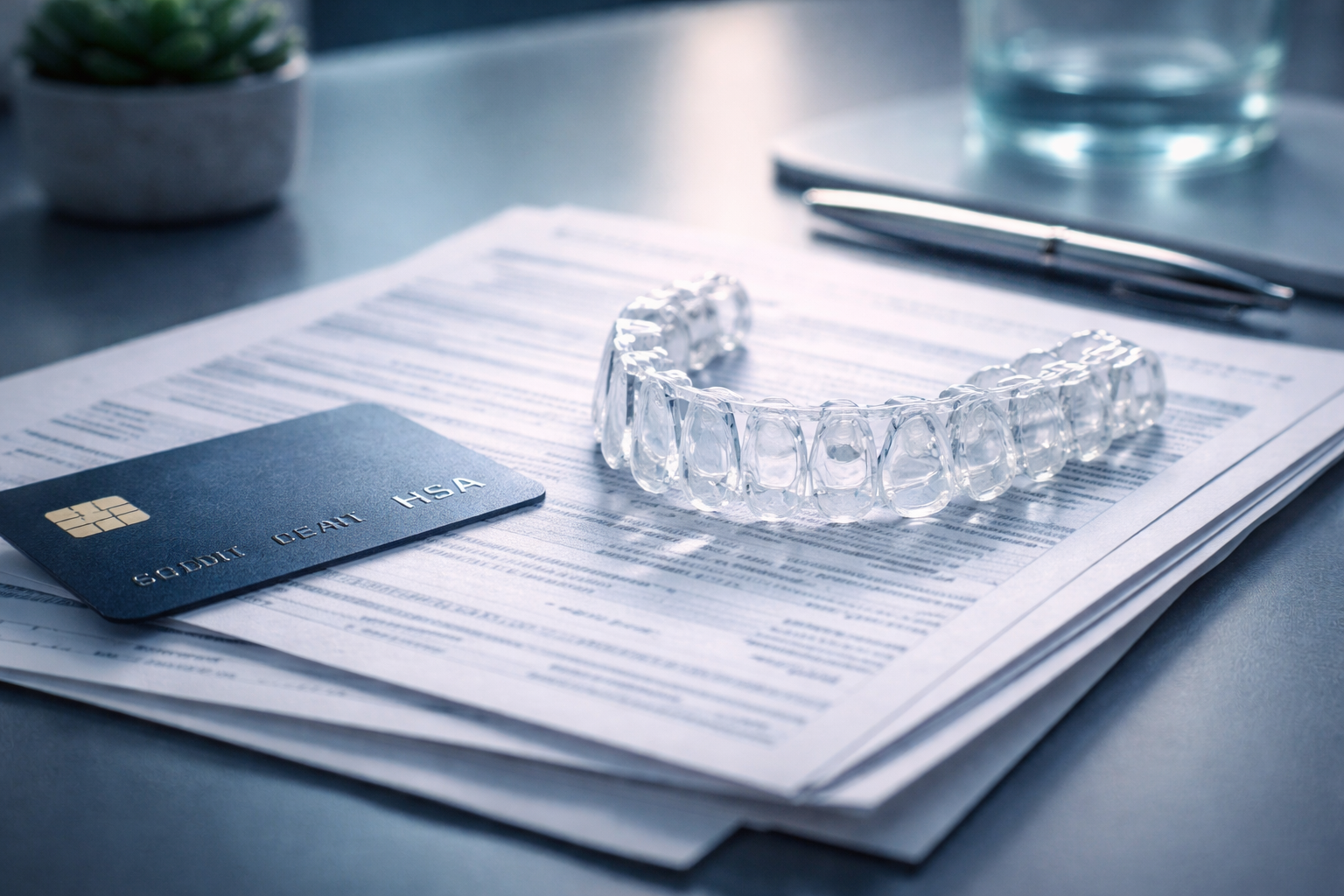
Most patients accept the first orthodontic quote handed to them without realizing one fundamental truth: Orthodontic pricing is often negotiable.
While the average cost of braces ranges from $3,000 to $7,500, these numbers are not always set in stone. Quotes vary dramatically between clinics not just because of geographical location, but due to how the clinic structures its internal lab fees, overhead, and financing risks. This guide will show you how to act like a financial insider, strategically negotiate your contract, and utilize tax-advantaged accounts (HSA/FSA) to save thousands.
Understanding the Orthodontic Pricing Structure
Before you negotiate, you must understand what you are actually paying for. A comprehensive orthodontic bill is typically built on five pillars:
- Diagnostic Records: X-rays, 3D digital scans, and initial clinical photography.
- The Appliance Base Cost: The physical materials (metal brackets, custom lingual wires, or Invisalign clear aligners).
- Chair Time & Adjustments: The doctor’s expertise and the monthly visits to tighten wires or check progress.
- Retainers: The post-treatment hardware required to keep teeth straight.
- Refinements: Extra trays or adjustments needed if teeth don’t track perfectly.
What Is Negotiable (And What Is Not)
You cannot negotiate the cost of raw materials, but you *can* negotiate the terms of the service. Here is the insider breakdown:
Usually Negotiable
- Paid-in-Full (PIF) Discount: Usually 3% to 8% off the total.
- Down Payment Flexibility: Lowering the initial cash needed to start.
- Monthly Installment Structure: Stretching payments over 24 months instead of 18.
- Retainer Inclusion: Asking to bundle the first set of retainers into the base fee.
Rarely Negotiable
- Lab Fees: If you choose Invisalign, the doctor pays a flat fee to Align Tech. They cannot discount this.
- Specialist Expertise: A board-certified orthodontist won’t price-match a general dentist.
- Base Appliance Cost: High-end aesthetic options (like Lingual Braces) carry high hard costs.
Using HSA and FSA Strategically
According to the Internal Revenue Service (IRS), orthodontic treatment is an eligible medical expense. Paying with pre-tax dollars effectively gives you a 20% to 30% discount on your treatment, depending on your tax bracket.
HSA (Health Savings Account)
This money is yours forever. It rolls over annually. If you have an HSA, you can use it to pay your monthly in-house installments automatically, completely tax-free.
FSA (Flexible Spending Account)
This is strictly Use-It-Or-Lose-It by the end of the year, and it has annual contribution limits.
🔥 The Financial Hack (The Year-Split Strategy): If your treatment costs $5,000, ask the billing coordinator to structure your invoice across two calendar years. Pay your down payment and a few months using your current year’s FSA in November/December (so you don’t lose those funds). Then, pay the remaining balance using your newly reloaded FSA in January of the next year. This maximizes your tax advantage without hitting the annual cap.
How 0% Interest Plans Really Work
Many clinics advertise “0% Financing,” but not all plans are created equal. You must read the fine print.
1. In-House Orthodontic Plans (The Best Option)
The clinic itself acts as the bank. You pay a down payment, and they spread the rest over your estimated treatment time (e.g., $150/month). This is usually a true 0% interest plan. However, if you miss a payment, they may pause your treatment (refuse to tighten your wires) until you catch up.
2. Third-Party Lenders (The Deferred Interest Trap)
Companies like CareCredit or LendingClub often offer “0% APR for 18 months.” But beware: this is often Deferred Interest. If you do not pay off the entire balance by month 18, they will retroactively hit you with 26%+ interest dating back to day one. Only use these if you are 100% certain you can pay off the balance before the promo period ends.
The Negotiation Script (What to Actually Say)
Do not be shy. Financial coordinators at orthodontic clinics expect these conversations. Use these exact scripts during your consultation:
-
To lower the total cost:
“I am ready to start treatment today, but I don’t need financing. If I pay the entire balance upfront in cash or check right now, what is the Paid-In-Full discount?” -
To improve cash flow:
“I can only afford $150 a month, but your quote says $250. If I increase my initial down payment today by $500, can we extend the term slightly to lower my monthly obligation to $150?” -
To avoid hidden fees:
“Does this comprehensive fee include my first set of clear retainers at the end of treatment, or will that be a surprise $500 charge later? Can we bundle it into the contract now?”
When Paying More Is Actually Smarter
Negotiating is smart, but bargain-hunting for medical procedures can be dangerous. Do not choose a provider solely because they are the cheapest.
A general dentist offering “discount aligners” might seem like a steal compared to a board-certified orthodontist. However, if your clinical case is highly complex (severe crowding or skeletal issues), the cheap option will likely fail. You will end up paying for aligners twice—once to the dentist, and a second time to the orthodontist to fix the mess (Retreatment Cost). Paying for specialist expertise upfront is the ultimate money-saving strategy.
Real-World Case Scenarios
Case 1: Teen Braces (FSA Optimization)
The Plan: $5,000 total. The parents consulted in November. They paid a $1,500 down payment using their expiring 2025 FSA funds. On January 1st, they paid the remaining $3,500 using their newly reloaded 2026 FSA. Result: Fully tax-free treatment without exceeding the annual FSA limit.
Case 2: Adult Aligners (HSA + 0% Plan)
The Plan: $6,000 total. The patient negotiated the down payment to $500. They setup an auto-draft of $229/month for 24 months drawn directly from their HSA debit card. Result: 0% interest, completely tax-deductible monthly cash flow.
Case 3: The Cash PIF Negotiation
The Plan: $7,000 total for traditional braces. The patient had cash savings. They asked for the PIF (Paid in Full) discount. The clinic offered 7% off to avoid credit card fees and monthly billing admin work. Result: The patient paid $6,510, instantly saving $490.
Strategy Over Emotion
Orthodontic treatment is a long-term investment in your health and confidence. The smartest patients plan their financing as carefully as their treatment.
Don’t let the sticker shock scare you away. Ask questions, understand the terms, leverage your tax-advantaged accounts, and secure a payment plan that works for your budget.
Review Our Master Braces Cost GuideFinancial & Medical Disclaimer: This article serves as an educational resource regarding common orthodontic billing practices and does not constitute official tax, financial, or medical advice. HSA and FSA rules are governed by the IRS and are subject to change. Always consult with a certified tax professional or your plan administrator regarding your specific eligibility.
Related Financial Guides
Pro Tip
If you have insurance, always negotiate the out-of-pocket balance *after* your insurance has applied their contracted rate.