
Open Bite Treatment Explained: Braces, Aligners, or Surgery?
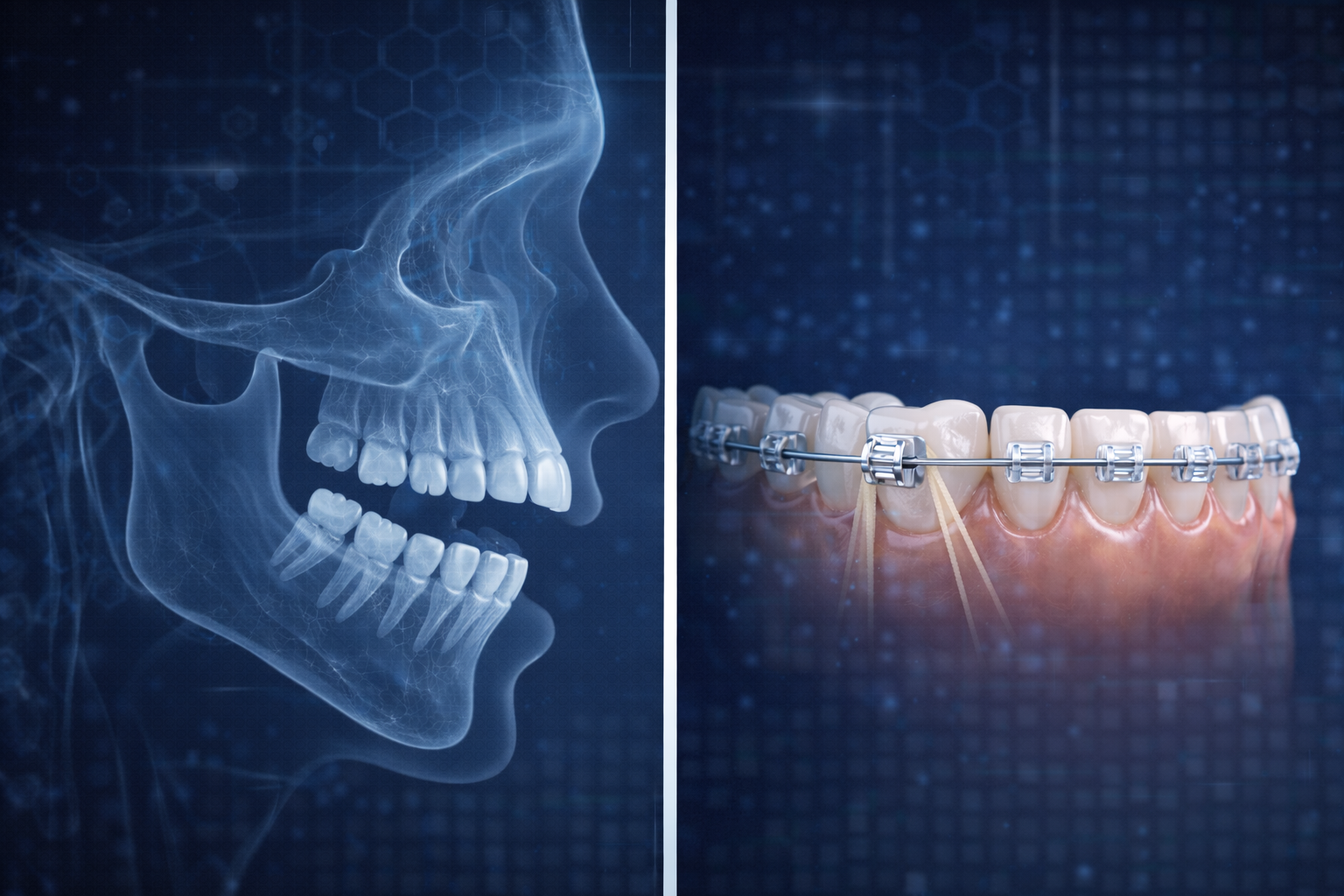
An open bite is not simply crooked teeth. It is a severe vertical control problem that often involves a complex interplay of skeletal discrepancies and muscular habits.
“Unlike an overbite where teeth overlap too much, an open bite creates a physical gap between the upper and lower arches, severely impacting speech, chewing efficiency, and joint health.”
Choosing between braces, clear aligners, or surgical intervention requires a deep understanding of orthodontic biomechanics. Today, we look beyond the marketing aesthetics and dive into the clinical reality of open bite correction.
What Is an Open Bite?
In a healthy occlusion, the upper teeth should slightly overlap the lower teeth vertically. An open bite represents a vertical overlap deficiency. It is clinically classified into two main types:
- Anterior Open Bite: The most common form. The back teeth (molars) touch when the jaw is closed, but the front teeth do not, leaving a visible gap.
- Posterior Open Bite: Less common. The front teeth touch, but the back molars do not meet, making it incredibly difficult to chew food.
What Causes an Open Bite?
Orthodontists must identify the root cause to prevent the bite from relapsing after treatment. The causes are broken down into three categories:
1. Skeletal Causes
Often genetic. Caused by Vertical Maxillary Excess (the upper jawbone grew too far downward) or “Long Face Syndrome,” where the jaw hinges at a steep downward angle.
2. Dental Causes
Usually environmental. Posterior Extrusion occurs when the back molars erupt too far out of the gums, acting like a wedge that props the front of the mouth open.
3. Muscular Factors
Childhood habits like prolonged thumb sucking, pacifier use, or a Tongue Thrust (pushing the tongue against the front teeth when swallowing) physically move the teeth and bone over time.
Severity Classification
- Mild: 1–2 mm vertical gap. Often purely dental and easy to close.
- Moderate: 3–4 mm vertical gap. Requires specific intrusion mechanics on the molars.
- Severe: > 5 mm visible vertical discrepancy, almost always indicating a foundational skeletal issue.
The Biomechanics of Open Bite Correction
Closing an open bite requires pushing the back molars up into the jawbone (Posterior Intrusion) or pulling the front teeth down (Anterior Extrusion). Here is how modern systems handle this intense mechanical challenge:
Open Bite Correction With Braces
Braces provide unmatched force application for severe cases. Your orthodontist will utilize:
- TADs (Temporary Anchorage Devices): Tiny titanium mini-screws placed temporarily in the jawbone. Rubber bands connect the braces to the TADs to pull the molars deep into the gums, closing the wedge at the front.
- Vertical “Box” Elastics: Heavy rubber bands worn in a square shape at the front of the mouth to pull the upper and lower incisors together.
- Bite Turbos / Ramps: Used carefully on molars to help intrude them through chewing force.
Open Bite Correction With Aligners
Clear aligners (like Invisalign) actually have a built-in advantage for mild open bites due to the “Bite Block Effect”—the plastic covering the molars naturally pushes them into the gums when you clench your jaw.
- Programmed Intrusion: Trays are engineered to apply downward pressure on the molars.
- Anterior Attachments: Heavy composite bumps on the front teeth allow the plastic to grip and extrude them.
- Limitation: Because plastic flexes, aligners have limited molar intrusion capabilities compared to TAD-assisted braces in severe cases. Success is heavily dependent on patient compliance.
Braces vs. Aligners for Open Bite
As detailed in our Clinical Complexity Matrix, case selection is everything:
| Case Type | Braces (Traditional/Ceramic) | Clear Aligners (Invisalign) |
|---|---|---|
| Mild Dental (1-2mm) | Excellent | Good |
| Moderate Dental (3-4mm) | Strong | Moderate (Needs Elastics) |
| Severe Skeletal Discrepancy | Limited (Camouflage) | Not Sufficient |
| TAD-Assisted Cases | Excellent | Limited |
When Jaw Surgery Is Considered
Similar to severe underbite corrections, if an adult patient has “Long Face Syndrome” with a severe vertical skeletal discrepancy, moving the teeth alone will not close the bite safely.
A combined Orthodontic-Surgical Approach is required. An oral surgeon performs orthognathic surgery to literally reposition the upper jawbone higher up into the skull (Le Fort I osteotomy), which allows the lower jaw to rotate upward and close the open bite permanently.
Treatment Timelines & Costs
- Mild Cases: 12–18 months.
- Moderate Cases: 18–24 months (often requiring TADs or heavy elastics).
- Severe/Surgical Cases: 24+ months (including pre-surgical orthodontics, healing time, and post-surgical detailing).
Regarding finances, overall braces costs will increase if your open bite requires TADs (usually an extra $300-$600 per screw). If orthognathic surgery is necessary, costs jump significantly, though the hospital surgical fees are often covered by major medical insurance if deemed medically necessary to restore chewing function.
Risks of Leaving an Open Bite Untreated
An open bite is a functional handicap. Without treatment, patients often suffer from:
- Speech Issues: Chronic lisps and difficulty pronouncing “s” and “z” sounds.
- Chewing Difficulty: Inability to bite into thin foods (like lettuce or pizza) using the front teeth, forcing the back molars to do 100% of the work.
- TMJ Strain: Overworking the back molars causes severe jaw joint deterioration over time.
- Aesthetic Imbalance: An elongated facial appearance and an inability to comfortably rest the lips together (lip incompetence).
The Bottom Line
An open bite requires precise vertical control, making it one of the most challenging conditions to treat.
While aligners can assist in mild cases, moderate to severe discrepancies require the heavy biomechanical lifting of braces, TADs, or surgical intervention. Always trust a board-certified specialist’s diagnosis over aesthetic preferences.
Review the Clinical Matrix Before ChoosingMedical Disclaimer: This article is intended for educational purposes only to explain orthodontic biomechanics and vertical control mechanisms. Open bite severity and surgical necessity must be determined through comprehensive X-rays, 3D scans, and a physical evaluation by a licensed, board-certified orthodontist.
Related Clinical Guides
Childhood Habits
Thumb sucking past age 5 is the #1 preventable cause of severe anterior open bites. Early orthodontic intervention can break the habit before skeletal damage occurs.